Lore & Explained / Folklore
Gasteiner Perchten: Why They Wear Towering Headdresses
Gastein’s cap bearers wear towering headdresses to dance blessings for the new year. See what the caps depict and how the custom differs from Krampus.
Topics: Gasteiner Perchten, Alpine Folklore, Salzburg, New Year Customs, Winter Folklore
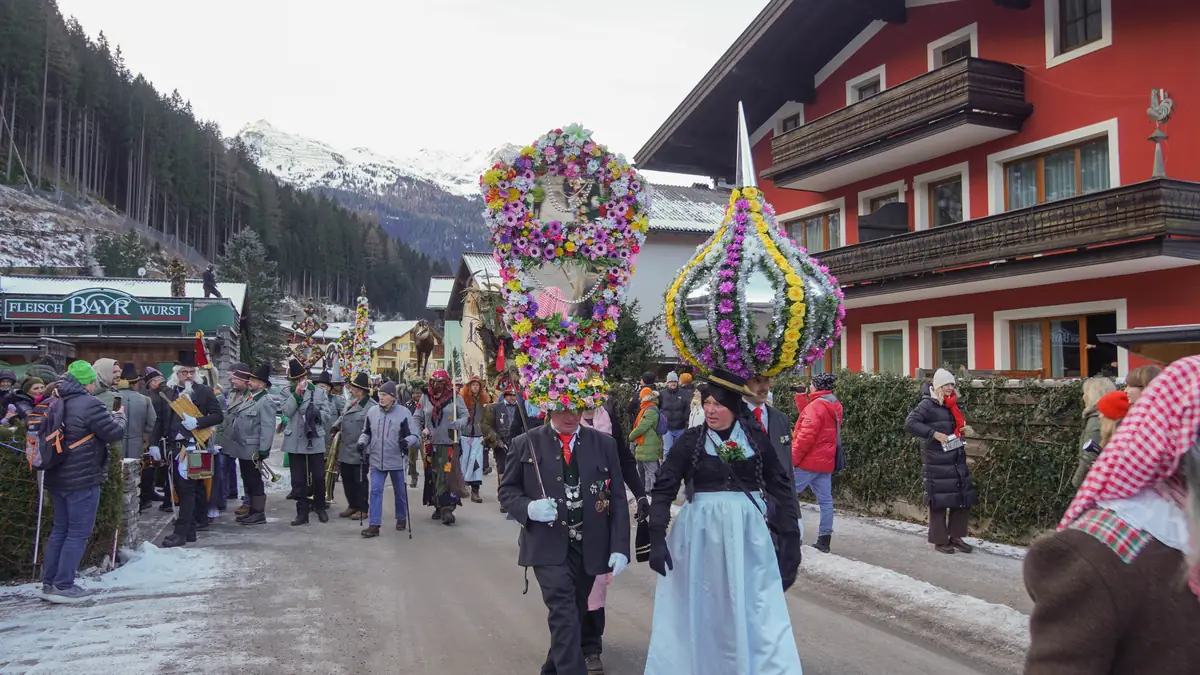
The Gasteiner Perchten wear towering decorated headdresses as part of a New Year procession in Austria’s Gastein Valley. The cap bearers dance and bow to offer blessings to spectators. Gastein’s procession also includes frightening masked figures, whose role differs from that of the people carrying the tall caps.
What happens when a cap bearer stops?
The Austrian Commission for UNESCO records a specific sequence. The procession’s captain signals, and the bearers dance briefly and bow to the people watching. It is a way to offer good wishes for the coming year. The commission describes around 30 cap bearers among roughly 140 participants in its inventory entry.
This role carries standing in the local association. Participants take on different duties as they gain experience. As the commission describes it, becoming a cap bearer is one of the most esteemed roles. A photograph can show how someone carries the frame. The sequence of movements and the meaning of the greeting come from the people who document the custom. That distinction between an image and the practice it depicts also matters in What Did Plague Doctors Wear? The Beak Mask, the 1656 Prints and the Myth.
What is on the headdresses?
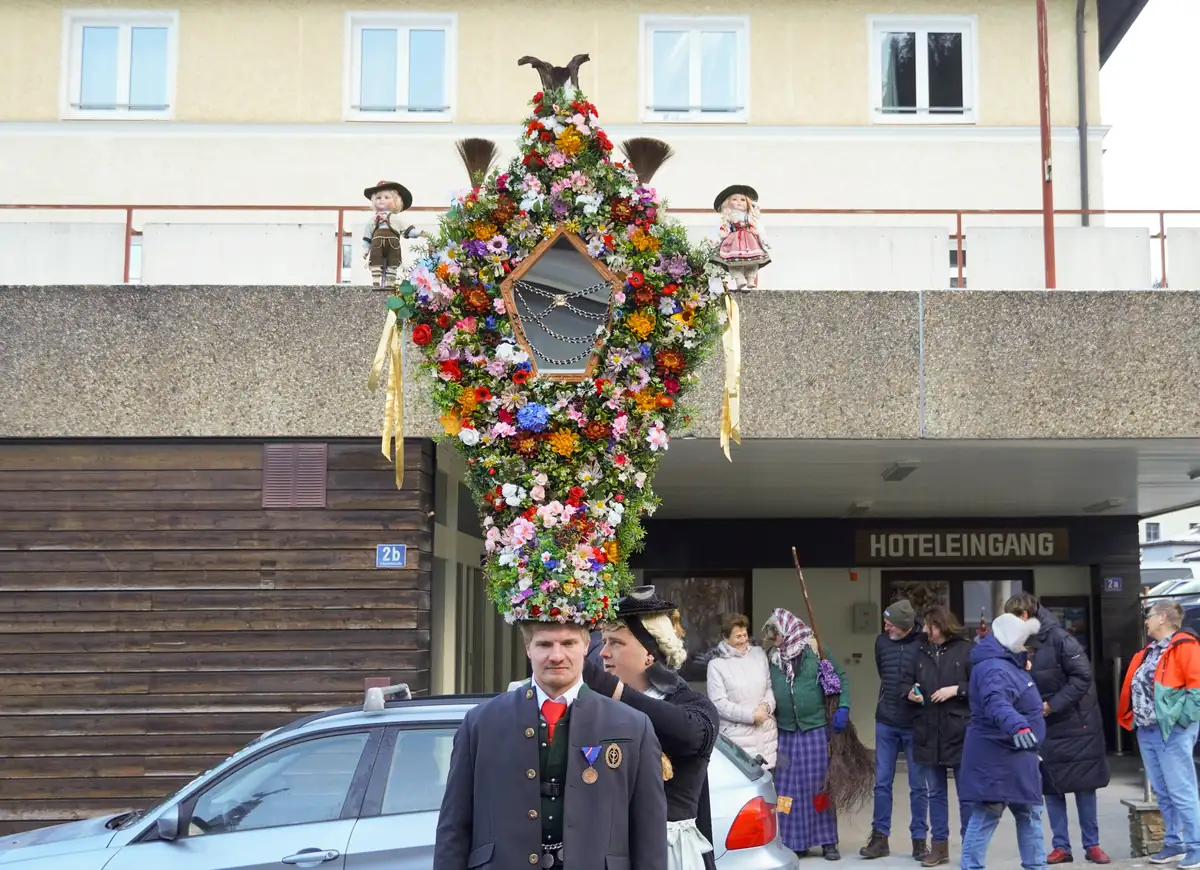
Gastein’s tourism authority describes caps as high as 2.5 metres at the 2026 procession, with mirrors and mounted animals among the decorations. The photograph below shows a tall floral frame around a mirror. The Volkskundemuseum Wien’s historical images show how different the designs can look, including a bird-themed headpiece in the Pongau region. A mirror on one photographed cap cannot establish a single meaning for every mirror across the Alps.
Are the cap bearers the same as Krampus?
In Gastein the Schönperchten, or beautiful Perchten, offer blessings. The local procession also includes masked characters such as witches and devils. The accompanying figures and cap bearers have different parts to play in the same event. Around St. Nicholas’s Day in December, the horned figure in Krampus Explained: The Real Alpine Folklore Behind Christmas’s Horned Monster appears in other processions. Salzburg’s city guide also documents modern events that put Krampus groups and Perchten groups together, so a parade name does not tell you what every participant represents.
Dates are one clue to how a regional custom works. For another example, Why You Shouldn’t Pick Blackberries After Michaelmas: The Devil’s Spit Folklore Explained follows a tradition whose timing varies between communities even as the story travels.
How far back can the caps be traced?
The Vienna folk museum reproduces a Gastein photograph from around 1909 featuring a mix of decorated headdresses and accompanying characters. It provides a clear point of comparison with the 2026 pictures. It cannot establish that today’s costume designs or rituals have persisted unchanged. The Austrian inventory registered the living Gastein tradition in 2011.
The inventory places the recurring Gastein procession in the period from New Year’s Day to Epiphany and describes a four-year cycle. The tourism authority named January 1 in Bad Gastein and January 6 in Bad Hofgastein for the 2026 edition. Those are historical dates for the edition pictured here. A calendar entry for another Perchten event should be checked against its own organizer.
Frequently asked questions
What blessing do Gastein’s cap bearers give?
They offer good wishes for the new year through a short dance and a bow. The procession’s captain signals when they perform.
How tall can a Gasteiner Perchten cap be?
Gasteinertal Tourism describes caps reaching about 2.5 metres in the 2026 event. The decorations and dimensions vary by design.
Where were the photographs taken?
Naturpuur took both photographs during the Gastein New Year procession on January 1, 2026. The main photograph shows the cap bearers in the street in Bad Gastein.
Hero photo: Naturpuur / Wikimedia Commons, cropped and resized under CC BY-SA 4.0.Sources & further reading
- Austrian Commission for UNESCO, national inventory entry for Perchten in Gastein
- Volkskundemuseum Wien, archival photographs and the history of Perchten
- Volkskundemuseum Wien, 1909 Gastein group photograph and context
- Gasteinertal Tourism, announced dates, cap dimensions and decoration for the 2026 procession
- Tourismus Salzburg, Krampus and Perchten customs