Lore & Explained / Folklore
St Andrew’s Relics: The Lost Shrine and Edinburgh Gifts
The medieval relics of St Andrew vanished from Fife. See what the St Rule legend says, what records establish and what Edinburgh received in 1879 and 1969.
Topics: St Andrew, St Rule, Scotland, Relics, Scottish Reformation
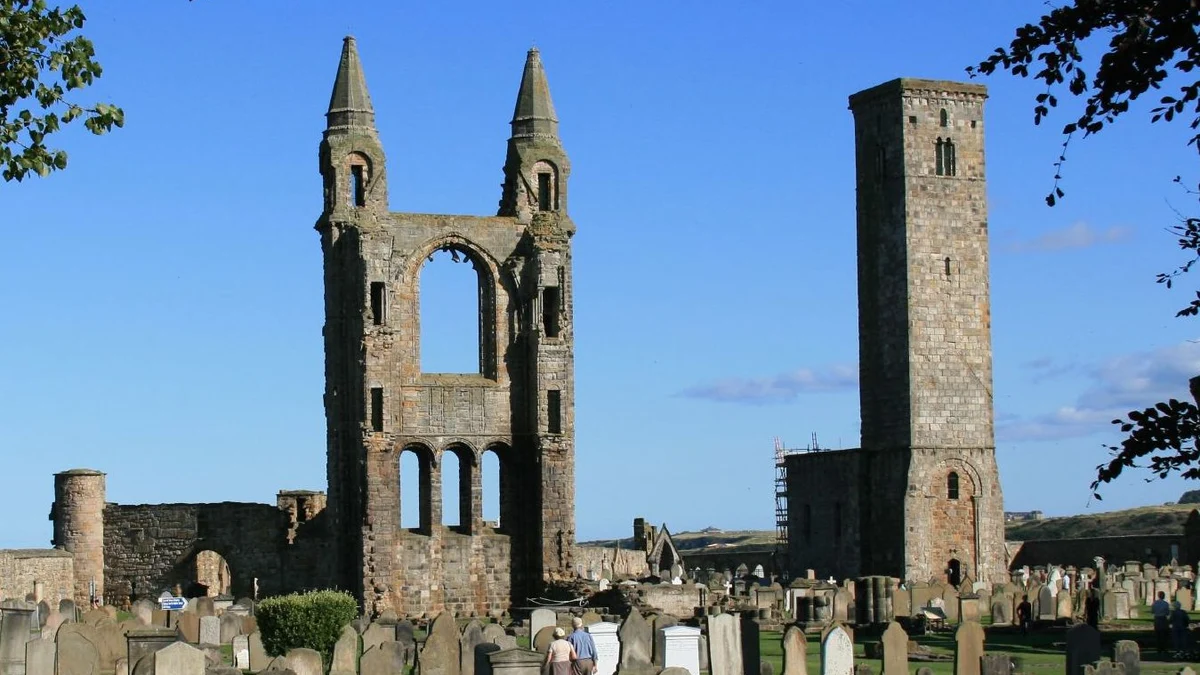
Andy Hawkins / Wikimedia Commons / CC BY-SA 2.0. Cropped and resized under the same license.
The medieval relics kept at St Andrews Cathedral in Fife disappeared during the Scottish Reformation, and their fate remains unknown. St Mary’s Catholic Cathedral in Edinburgh holds two relics attributed to St Andrew that it received separately, in 1879 and 1969. The medieval shrine and the two modern gifts have different histories.
How did St Rule supposedly bring the bones to Fife?
In the version told by Historic Environment Scotland, St Rule, also called Regulus, carried bones from Patras in Greece. He was supposed to take them far away for safekeeping. A storm drove him ashore in Fife, where a Pictish settlement grew into St Andrews. The square tower still standing near the cathedral ruins bears his name.
There are older versions with different routes and dates. In his study of the medieval pilgrimage centre, historian Ian Campbell describes two surviving accounts in forms that date to the early twelfth century. One places Regulus in Constantinople under Theodosius II. The other sets the journey in 345 under Constantius II. Both bring him to Fife through the realm of a Pictish king who, as Campbell points out, lived centuries after either emperor.
What can historians establish about the medieval shrine?
Campbell traces the earliest suggestion of relics at the site to a mid-tenth-century account about an Irish pilgrim. That gives historians a much better basis for discussing the growth of the shrine than for reconstructing Regulus’s journey. The 1320 Declaration of Arbroath invokes Andrew as Scotland’s patron and protector. It documents his place in Scottish political and religious life without establishing how the relics arrived.
The Scottish Parliament’s November 26 debate, ahead of St Andrew’s Day, revisited both the legend and the disappearance of the relics during the Reformation. The account leaves their eventual fate open. In What Sutton Hoo’s Garden Field Sand Body Reveals, material traces allow archaeologists to test what happened at a burial. The surviving accounts of the shrine establish a history of veneration, while the missing relics leave their fate beyond that kind of test.
What relics does Edinburgh hold today?
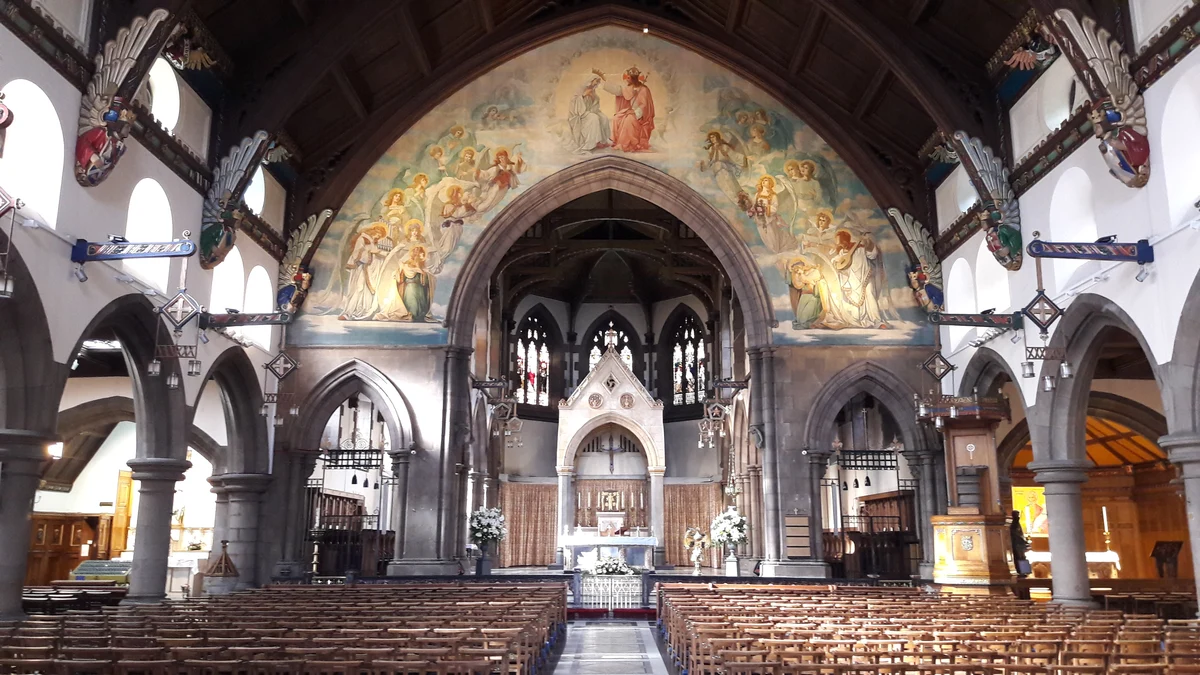
According to the archdiocese, the Archbishop of Amalfi gave Edinburgh a fragment believed to be part of Andrew’s shoulder bone in 1879. Pope Paul VI gave another relic to Cardinal Gordon Joseph Gray in 1969. St Mary’s Cathedral records that the altar was adapted to hold both before Pope John Paul II’s 1982 visit. These records document the gifts and their custody in Edinburgh.
How is the November feast connected?
November 30 is St Andrew’s Day. The date connects traditions beyond Scotland. Andrzejki: The Wax and Key Ritual of St Andrew’s Eve explains a Polish custom that falls on the eve of the same feast. Other saints’ days acquired different regional associations, as Why You Shouldn’t Pick Blackberries After Michaelmas: The Devil’s Spit Folklore Explained shows.
Frequently asked questions
Where are St Andrew’s relics in Scotland today?
Two relics attributed to St Andrew are kept at St Mary’s Catholic Cathedral in Edinburgh, at its National Shrine of St Andrew.
Who supposedly brought St Andrew’s bones to Scotland?
Tradition names St Rule, also called St Regulus. Medieval accounts disagree on the chronology and starting point of his voyage to Fife.
What happened to the original medieval relics at St Andrews?
The relics disappear from the historical record around the Scottish Reformation. Their eventual fate remains unknown.
Lead photo: Andy Hawkins / Wikimedia Commons, cropped and resized under CC BY-SA 2.0.Sources & further reading
- Historic Environment Scotland, St Andrews Cathedral and St Rule
- Ian Campbell, Planning for Pilgrims: St Andrews as the Second Rome
- Scottish Parliament, Official Report, November 26, 2026
- National Records of Scotland, Declaration of Arbroath translation
- St Mary’s Catholic Cathedral, cathedral history
- Archdiocese of St Andrews and Edinburgh, Our Saints