The Index / Unsolved Cases
Lizzie Borden Explained: The Murders, Trial, and What the Evidence Actually Shows
Andrew and Abby Borden were killed with a hatchet in their Fall River home on August 4, 1892. Lizzie Borden was tried and acquitted -- the case was never legally resolved beyond that.
Topics: Lizzie Borden, Fall River, True Crime, 1892, Unsolved Cases
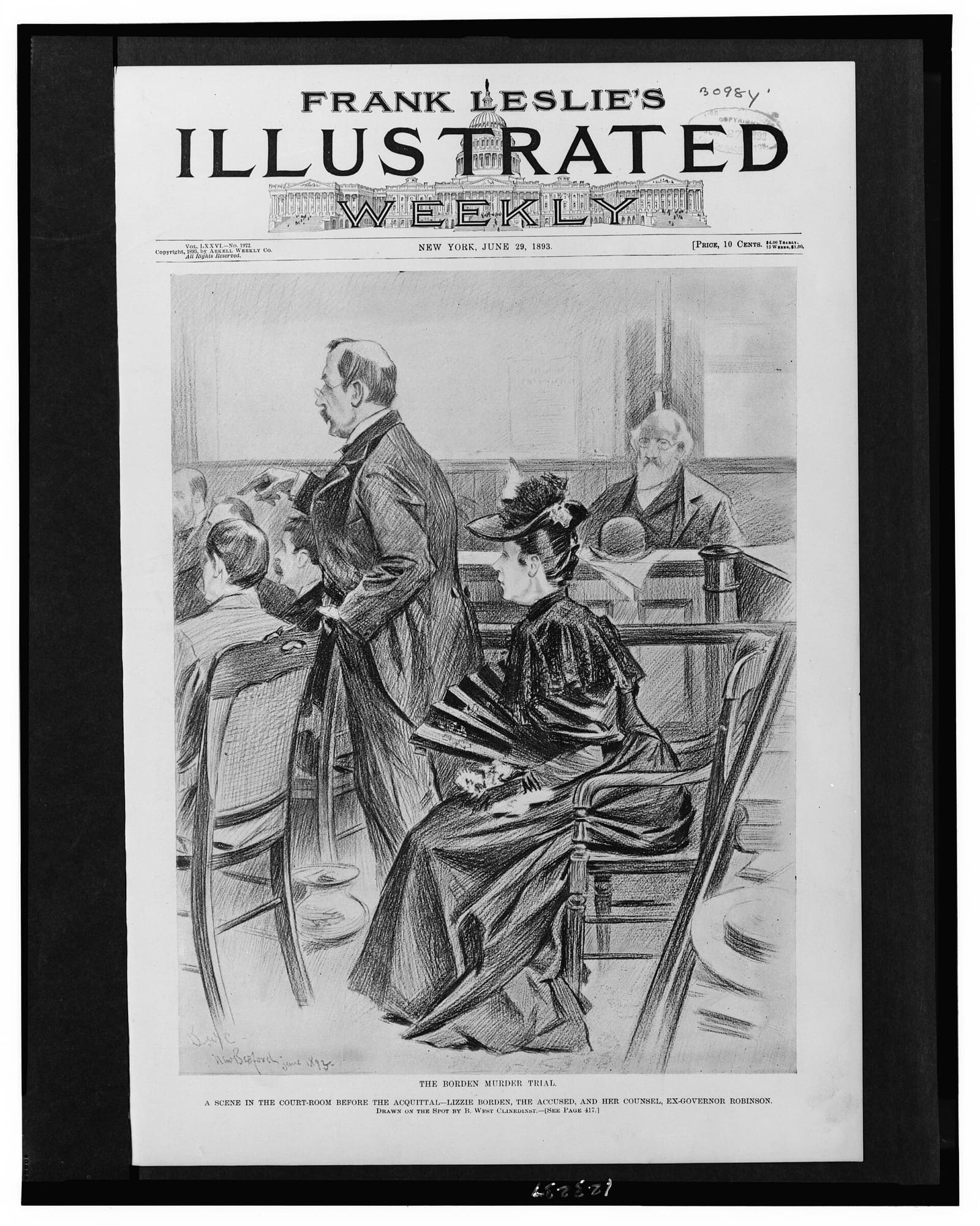
B. West Clinedinst, 1893, via Library of Congress / Wikimedia Commons (Public Domain)
Andrew and Abby Borden were killed with a hatchet in their Fall River, Massachusetts, home on the morning of August 4, 1892. Their daughter Lizzie was tried for the murders the following June and acquitted by a jury in about 40 minutes. That acquittal is a legal fact, not a footnote to work around — whatever any given retelling implies about her guilt, the only formal legal determination in this case found her not guilty, and double jeopardy has permanently closed the door on retrying her. What’s actually left, more than 130 years later, is a genuinely well-documented crime scene, a trial record full of excluded and contested evidence, and no one else ever charged.
The Household
Andrew Jackson Borden was a wealthy Fall River businessman, prosperous through furniture, casket-making, and real estate, known locally for being notoriously frugal despite his wealth. His first wife, Sarah, died in 1863, leaving two daughters, Lizzie and her older sister Emma. Andrew remarried Abby Durfee Gray, and by 1892 the household — Andrew, Abby, Lizzie, Emma, and a live-in Irish domestic servant named Bridget Sullivan, then 25 — had settled into a documented pattern of quiet tension. Lizzie and Emma reportedly ate meals separately from their father and stepmother much of the time, and surviving accounts describe Lizzie as resentful of Abby, believing she had married Andrew for his money. None of that establishes motive for murder on its own; it’s background the case has always been read through, not proof of anything.
The Morning of August 4, 1892
Lizzie and Emma’s maternal uncle, John Vinnicum Morse, had stayed over the previous night and left with Andrew after breakfast, around 8:45 to 9 a.m. Sometime between 9 and 10:30 that morning, Abby Borden went upstairs to the guest room to make the bed, where she was killed — struck first above the ear, then repeatedly, roughly eighteen or nineteen times in total, and found later face down on the floor. Andrew returned home around 10:30, and Bridget Sullivan reported hearing Lizzie laughing upstairs around that time. By approximately 11 a.m., Andrew had been killed as well, resting on a downstairs sitting-room couch, struck about ten or eleven times with enough force to split one eye cleanly, suggesting he was likely asleep or at rest when the attack began. Around 11:10, Lizzie called Sullivan downstairs and reported that her father was dead. The wounds were still fresh.
This is worth stating plainly because it’s routinely garbled in retellings: the popular rhyme claiming “forty whacks” for Abby and an implied similar count for Andrew doesn’t match the documented wound counts. Abby sustained roughly eighteen to nineteen blows, and Andrew roughly ten to eleven — a real and brutal number of wounds, just not the specific figure that made it into the schoolyard rhyme.
The Physical Evidence
Autopsies checked both victims’ stomachs for poison, prompted by a household illness in the days before the murders; none was found. Investigators recovered two hatchets, two axes, and a separate hatchet head with a broken handle from the basement. That broken hatchet head became the primary weapon theory, in part because investigators noted the ash and dust coating it appeared possibly placed there deliberately to suggest long-term storage rather than recent use — though notably, none of the tools recovered were ever removed from the house as the actual murder weapon with full certainty established. A pail in the basement contained what looked like bloodied cloths; Borden attributed this to menstruation, and investigators did not examine it further at the time, a decision later criticized given the case’s overall reliance on physical evidence.
Four days after the murders, on August 8, Lizzie burned a dress in the kitchen stove, telling her sister Emma and a family friend, Alice Russell, who witnessed it, that the dress was ruined by paint. Whether it was the dress she’d worn on the morning of the murders was never conclusively established either way — a genuinely open question the case has never resolved, not a confirmed cover-up.
The Inquest
Lizzie was questioned at a coroner’s inquest beginning August 8, and her testimony did her no favors. She gave shifting, inconsistent accounts of her whereabouts that morning, at various points describing herself in the kitchen, the dining room, and on the stairs, and she frequently declined to answer questions directly, even when a direct answer might have helped her case. That inquest testimony was later ruled inadmissible at her actual trial the following year, which means the inconsistencies that did the most damage to her public reputation were never actually presented to, or tested by, the jury that acquitted her.
Evidence the Jury Never Heard
The day before the murders, evidence indicated Lizzie had attempted to purchase prussic acid, a form of hydrogen cyanide, from a local druggist, reportedly explaining she wanted it to clean a sealskin cloak. The trial judge excluded this evidence as too remote in time from the murders to be relevant. Whatever it might suggest, the jury that reached a verdict never weighed it, which is a significant qualification on how confidently anyone should treat that verdict as a full accounting of all the available evidence.
The Trial
Lizzie was arrested August 11, 1892, and formally indicted by a grand jury that December. Her trial ran from June 5 to June 20, 1893, prosecuted by Hosea Knowlton and William Moody (later a U.S. Supreme Court justice), and defended by Andrew Jennings, Melvin Adams, and former Massachusetts governor George Robinson. Two witnesses, Hyman Lubinsky and Charles Gardner, testified to seeing Lizzie near the barn around 11:03 a.m., supporting her account of being away from the house immediately before her father’s body was discovered. Presiding judge Justin Dewey, in his instructions to the jury before deliberation, delivered a summary widely described by historians as favorable to the defense. The jury acquitted her after roughly 40 minutes of deliberation and a single ballot. Leaving the courthouse, Lizzie told reporters she was “the happiest woman in the world.”
What the Acquittal Actually Means
An acquittal is a legal finding of not guilty. It permanently bars retrying the same person for the same crime, regardless of any evidence that might surface later — it does not, on its own, establish factual innocence, and it didn’t stop Lizzie from remaining, in the eyes of much of Fall River and later popular history, the case’s presumed suspect for the rest of her life. Both of those things are true at once: she was legally cleared, and no one else was ever charged or convicted.
Other Suspects, and Why None Have Held Up
Several alternative theories have circulated over the decades. Bridget Sullivan has occasionally been proposed as a suspect or accomplice, including one novelist’s speculative theory involving a secret relationship discovered by Abby; this remains speculation without supporting documentary evidence. John Morse, Lizzie’s uncle, provided investigators what some researchers have called a suspiciously detailed, overly precise alibi and was considered a suspect for a period, though nothing concrete tied him to the scene. A theory proposing an illegitimate son of Andrew’s, William Borden, as a suspect motivated by an extortion attempt was later undermined by genealogical research disproving the claimed relationship. None of these alternative theories has produced evidence stronger than what existed against Lizzie herself; they mainly demonstrate how wide open the case has remained.
Later Life
After the trial, Lizzie and Emma moved into a large house in one of Fall River’s more prominent neighborhoods, which Lizzie named Maplecroft. Despite their wealth, both sisters were largely ostracized by Fall River society for the rest of their lives. Lizzie faced a shoplifting accusation in Providence in 1897. In 1905, following a dispute connected to actress Nance O’Neill, Emma moved out of the shared house and the sisters reportedly never saw each other again. Lizzie died of pneumonia on June 1, 1927, at 66; Emma died nine days later. Lizzie’s estate, valued at more than $250,000 at the time, included a bequest of $30,000 to the local animal rescue league.

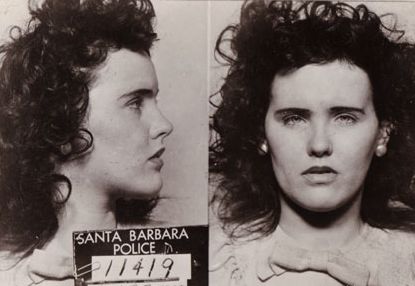
Lizzie Borden, photographed around 1890, roughly two years before the murders. Source. Public domain.
Why the Rhyme Endures, Even Though the Numbers Are Wrong
The “forty whacks” rhyme is generally understood to have originated as anonymous doggerel, possibly written to sell newspapers during the intense contemporary coverage of the case, later folded into general American folk-rhyme tradition and often misattributed to Mother Goose. It compresses a genuinely brutal, genuinely unresolved crime into something singsong and almost cartoonish, which is a large part of why the Borden case still gets treated as much as dark entertainment as documented history. The Borden house in Fall River now operates as a museum and bed-and-breakfast built around that same dark-tourism appeal — a real, if uneasy, afterlife for an unsolved double murder.
Lizzie Borden’s case sits within Morbid Index’s broader true-crime coverage as a documented crime with no definitive legal resolution, distinct from cases with a confirmed unidentified perpetrator like Jack the Ripper or the Zodiac Killer, and distinct from convicted cases like Ed Gein — a genuinely different category worth keeping separate rather than treating every unresolved true-crime case as interchangeable.
Frequently Asked Questions
Did Lizzie Borden kill Andrew and Abby Borden? This was never legally established. She was tried and acquitted in June 1893, and no one else was ever charged. The case remains formally unresolved.
What weapon was used? A hatchet or axe. Investigators recovered several hatchets and axes from the basement, including a hatchet head with a broken handle that became the leading weapon theory, though the exact murder weapon was never conclusively confirmed.
Why was Lizzie acquitted? The jury deliberated for about 40 minutes. Key evidence against her, including her inconsistent inquest testimony and an attempted prussic acid purchase the day before the murders, was excluded from trial, and two witnesses supported her account of being away from the house.
Did she burn a dress? Yes, four days after the murders, witnessed by her sister and a family friend. Whether it was the dress she wore the morning of the killings was never definitively established.
Did she try to buy poison? Evidence indicated she attempted to purchase prussic acid the day before the murders, reportedly to clean a garment. The judge excluded this evidence from trial as too remote in time to the crime.
Was the rhyme accurate? No. Abby was struck roughly eighteen to nineteen times and Andrew roughly ten to eleven times, not the “forty whacks” and implied similar count the rhyme describes.
Who else was suspected? Bridget Sullivan, the family’s servant, and John Morse, Lizzie’s uncle, were both floated as alternative suspects at various points, along with a later, since-disproven theory involving an alleged illegitimate son of Andrew’s. None produced stronger evidence than what existed against Lizzie.