The Index / Hoaxes
The Cottingley Fairies: How Two Girls Fooled Conan Doyle, and What the Record Shows
Two cousins photographed 'fairies' in Yorkshire in 1917 and 1920. See how Conan Doyle backed them, how the cut-outs were traced and what Frances never conceded.
Topics: Cottingley Fairies, Conan Doyle, Hoaxes, Spiritualism, Theosophy, Fairy Folklore
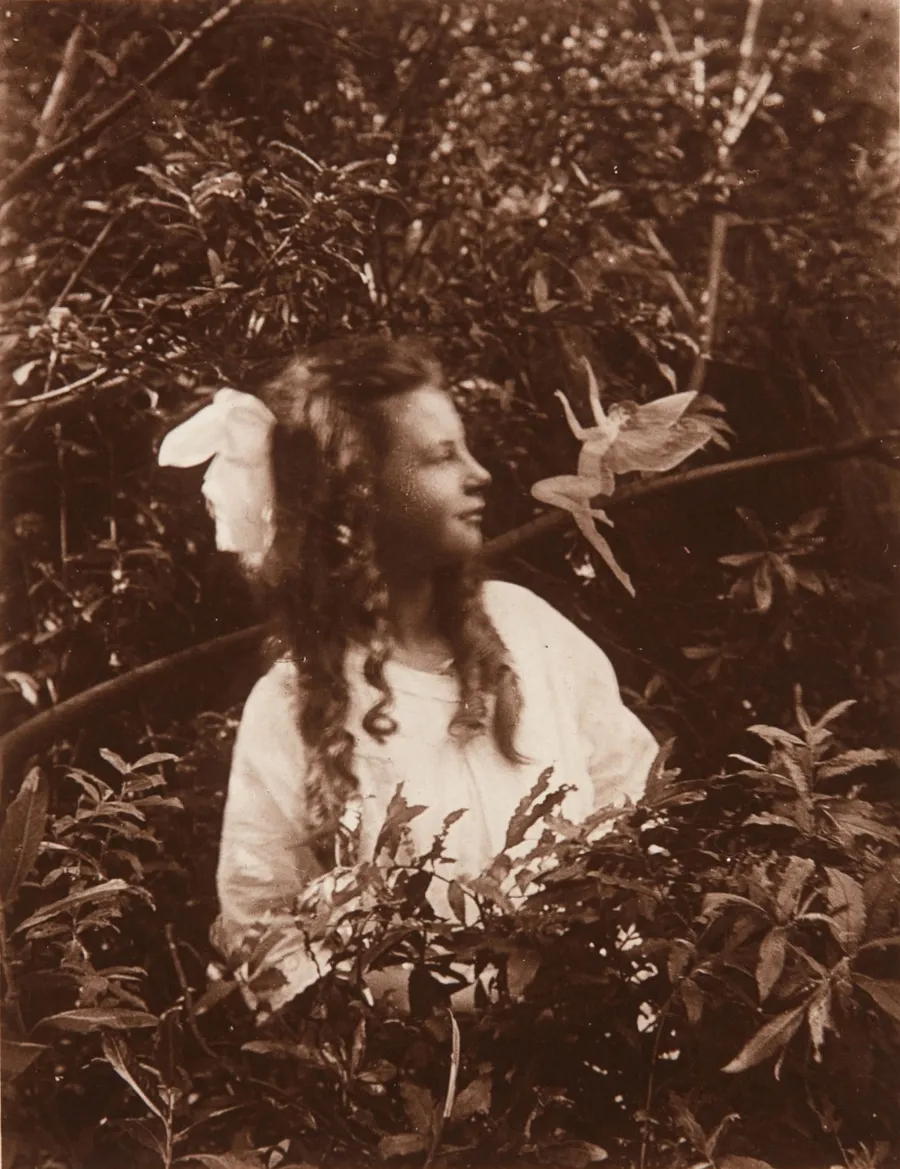
The Cottingley Fairies are five photographs taken in a Yorkshire garden in 1917 and 1920 by two cousins, Elsie Wright and Frances Griffiths. They appear to show the girls with small winged figures. The figures were paper cut-outs. Both women said so in 1983, although Frances maintained until her death that the last photograph was different.
What makes the case worth reading carefully is not the trick, which was simple, but how far it travelled. Sir Arthur Conan Doyle published the pictures in The Strand Magazine in December 1920 and then in a book, and supporters of the photographs answered each objection with a new explanation instead of a test. The record of that process survives in Doyle’s own words.
What are the five photographs?
The set is usually numbered in the order the pictures were made. The Sotheby’s lot description for a complete set of prints gives these captions and dates. The prints use the pseudonyms “Alice” (Frances) and “Iris” (Elsie), which Doyle’s book explains:
| No. | Subject (as captioned) | Date |
|---|---|---|
| 1 | “Alice and the Fairies” | July 1917 |
| 2 | “Iris and the Gnome” | September 1917 |
| 3 | “Alice and the Leaping Fairy” | August 1920 |
| 4 | “Fairy offering flowers to Iris” | August 1920 |
| 5 | “Fairy Sunbath, Elves etc.” | August 1920 |
Photographs 3 to 5 were made after Conan Doyle’s circle became involved.
Who were Elsie Wright and Frances Griffiths?
Elsie lived with her parents in Cottingley, near Bradford in West Yorkshire. Frances, her cousin, was born in Bradford on September 4, 1907 and, according to the Science Museum Group’s biography, came to stay with the Wright family in 1917, aged ten. Historic UK adds that Elsie was around sixteen, had artistic talent and had experience retouching photographs, and that her father Arthur had a darkroom and a Midg quarter-plate camera.
They were a child and a teenager when the first two pictures were made, and that matters for how the story is told. According to Historic UK, the cousins had told adults they went to the stream “to see the fairies”, and Elsie borrowed her father’s camera to prove it. The same account calls the project a stage-managed bit of fun that got out of hand.
How did Conan Doyle get involved?
Doyle’s own account, in The Coming of the Fairies (1922), says he first heard of “alleged photographs of fairies” in early May 1920 from the editor of the spiritualist journal Light. The trail led to Edward L. Gardner, whom Doyle describes as a member of the executive committee of the Theosophical Society in England and a lecturer on occult subjects.
Doyle was then preparing a Strand article about fairies. Science Museum Group notes that he had become interested in the paranormal after his eldest son died during the First World War. That is context for why the idea was attractive to him. It does not by itself explain a particular judgment.
To protect the family’s privacy, Doyle called them the “Carpenter family” of “Dalesby”, and the girls “Alice” and “Iris.” The same names appear on the early prints. This is why older books describe a village and a family that cannot be found on a map.
What did the experts say at the time?
This is the part of the record most often compressed into “experts were fooled.” Doyle’s text is more specific:
- Kodak. He reports that two experts at Kodak could not find any flaw in the negatives but declined to certify that they were genuine, because of a possible trap.
- Another photographic firm. One company declared that the background consisted of theatrical properties. Doyle did not name it and dismissed the objection after seeing the site.
- Harold Snelling. A professional photographer, Snelling, gave an opinion that Doyle quotes: the two negatives were single-exposure, open-air work with no trace of studio models made of card or paper, in his view.
Notice what each statement actually concerns. A finding that a negative has not been retouched is not a finding that the objects in front of the lens were living beings. In the Strand article, Doyle himself wrote that the two first pictures “stand or fall together”, and that both are false or both are true. He then argued that the circumstances pointed to the second alternative.
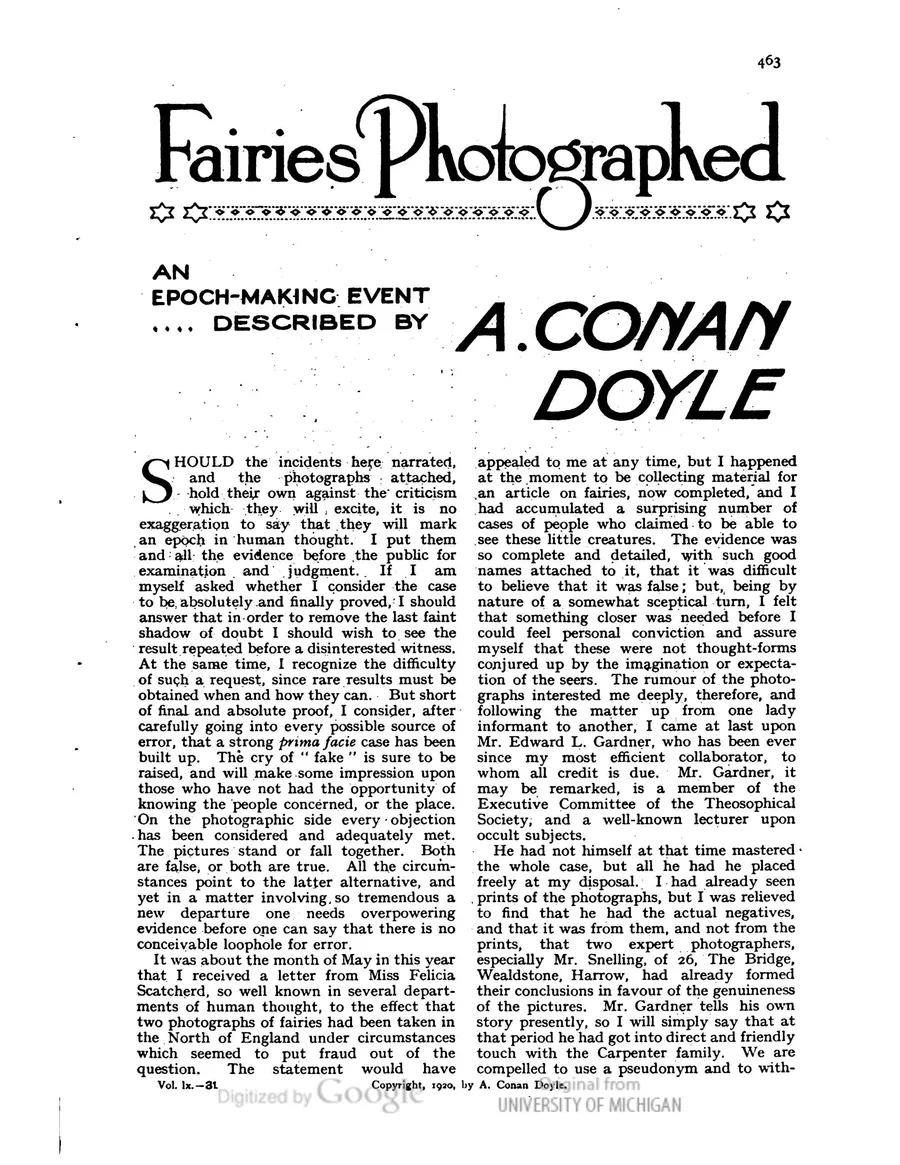
The opening page of “Fairies Photographed” in the Christmas 1920 Strand Magazine. Public-domain scan via Wikimedia Commons; resized and converted to WebP.
How were the 1920 photographs made?
In the book, Doyle and Gardner describe sending a camera and marked plates to the girls for a second series. Gardner’s account says the plates had been privately marked by a photographic company, and that two photographs were taken on Thursday, August 26, 1920 and one on Saturday, August 28. These are the three pictures reproduced as photographs 3, 4 and 5.
Doyle presented this as strengthening the case. It was a more controlled exercise than the first two pictures, but it was still a camera operated by the two girls. Marked plates show that the plates were not swapped. They cannot show that the subject in front of the lens was real.
Doyle’s later attempt, in August 1921, brought the girls together again with better equipment, including a stereoscopic camera and a cinema camera. By his own account, circumstances prevented success.
How did believers answer objections?
When photographers pointed out that the fairy figures cast different shadows from the humans, Doyle’s answer in the book was that “ectoplasm” has a faint luminosity of its own that would modify shadows. That is an explanation with no way to fail. If the shadows matched, the photographs looked real; if they did not, the figures were luminous. A claim that cannot be contradicted by any observation is not strengthened by surviving each objection.
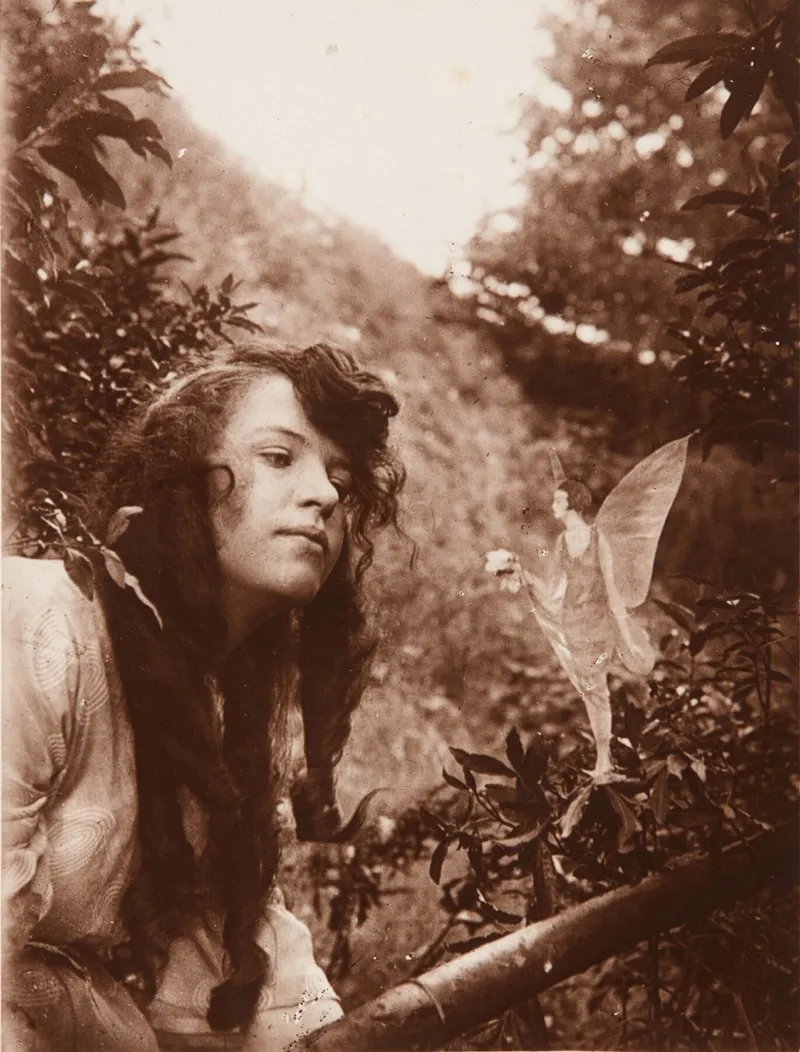
Photograph 4, August 1920: Elsie Wright with a winged figure. Public-domain reproduction via Wikimedia Commons; resized and converted to WebP.
Where did the fairies come from?
The figures were copied from an illustration. A 1914 book, Princess Mary’s Gift Book, includes a drawing by the artist Claude A. Shepperson of dancing figures with wings, illustrating the poem “A Spell for a Fairy.” Digitised copies are available at the Internet Archive.
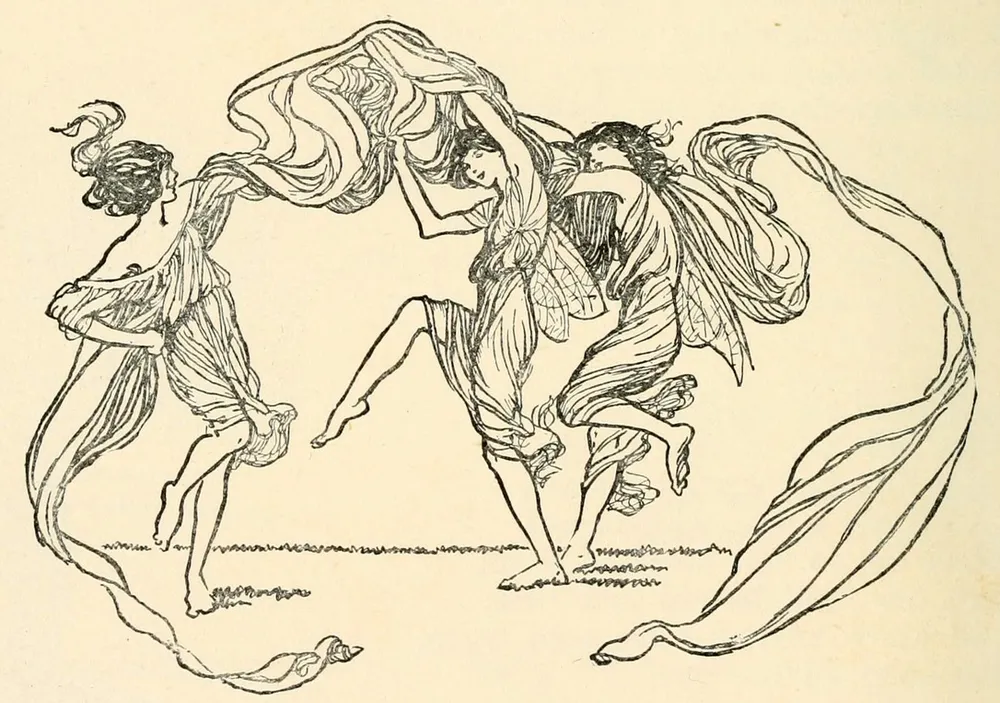
Claude A. Shepperson’s illustration for “A Spell for a Fairy” in the 1914 Princess Mary’s Gift Book (London). Public domain (author died 1921) via Wikimedia Commons; resized and converted to WebP.
Skeptoid says the figures’ poses match the book’s illustrations and credits James Randi’s investigation with drawing attention to the source in 1978. Historic UK describes the cut-outs as held upright with hatpins.
One caution: the published sources are not perfectly aligned on who found what and when, and some accounts of the investigation were written long after the events. The existence of the 1914 illustration is easy to verify. The attribution of every later discovery is not.
When was the hoax admitted?
The Science Museum Group states that in 1983 the pair admitted the fairies were cardboard cut-outs. Historic UK places Elsie’s confession in 1983, after Geoffrey Crawley, then editor of the British Journal of Photography, had investigated the pictures and concluded they were fakes.
According to Skeptoid, Elsie explained that she had copied the illustrations, cut them out, pinned them upright and photographed them. Frances agreed with most of this but insisted that the fifth photograph, “Fairies and their Sunbath”, was genuine. Frances Griffiths died in 1986.
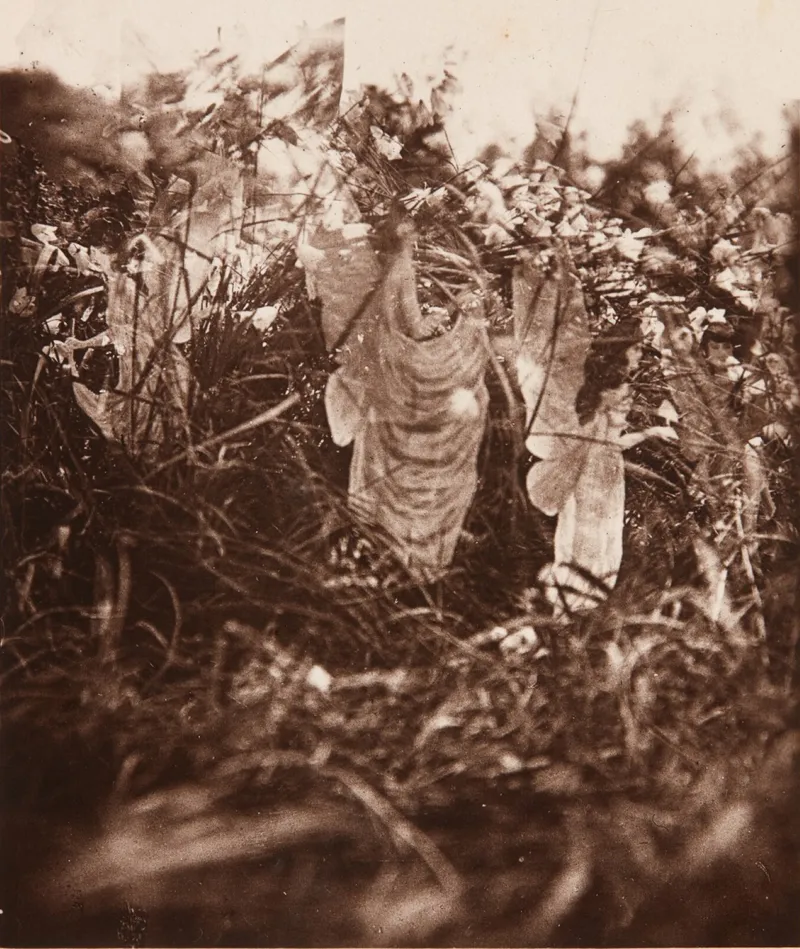
Photograph 5, August 1920, the image Frances Griffiths maintained was real. Public-domain reproduction via Wikimedia Commons; resized and converted to WebP.
What is documented, what is claimed, and what is still uncertain?
| Category | Statement |
|---|---|
| Documented | Five photographs were made in 1917 and 1920 and published in The Strand (December 1920) and in Doyle’s 1922 book. |
| Documented | Doyle’s book records the Kodak, Snelling and other reactions he chose to report. |
| Documented | The 1914 Princess Mary’s Gift Book contains Shepperson’s illustration matching the figure poses. |
| Reported by participants | In 1983 Elsie and Frances said the figures were cut-outs; the Science Museum Group and Historic UK record this. |
| Claim | Doyle, Gardner and others argued that the pictures showed real beings and that ectoplasm explained odd shadows. No evidence supports it. |
| Disputed | Frances said the fifth photograph showed real fairies. No independent evidence supports that, and she never produced any other. |
| Interpretation | Doyle’s belief reflected the post-war climate of grief and spiritual searching; it is a plausible context, not a proven motive. |
The accounts of 1983 are, by nature, memories recorded decades after the pictures. They agree on the main point (cut-out figures), and the independent match with the 1914 illustration supports it. They do not settle every detail of who held the camera on which day.
Why did it work?
Three things made the photographs persuasive, and none of them required fairies.
- Photography still carried authority. An unretouched negative suggested truth, and few people could say what “genuine” did and did not prove.
- A believing audience. Gardner used the images in Theosophical lectures, and Sotheby’s says prints were probably made to sell at such lectures. The photographs fit what these audiences already hoped to find.
- A well-known advocate. Doyle’s name brought the pictures wide publicity, and his public confidence gave them credibility they might not otherwise have had.
The same pattern appears in other cases where a recorded demonstration is treated as proof: the Fox sisters’ rappings and their confession and the history of talking boards both show how a sincere movement can rest on a trick or an ambiguous effect. In the Mary Toft rabbit hoax of 1726, it was the king’s anatomist who vouched for what he had seen with his own eyes. For an older English tale where a medieval chronicle and later retellings must be kept apart, see the Green Children of Woolpit. A later case of staged material that audiences took for fact is the Blair Witch legend. Doyle lent his authority to another story in 1923, when he suggested an “evil elemental” might have killed Lord Carnarvon; see the curse of Tutankhamun.
Frequently asked questions
Are the Cottingley Fairies real?
No. The figures were paper cut-outs, as both women said in 1983. The only disagreement was Frances’s view of the fifth photograph, for which no supporting evidence exists.
Who took the Cottingley Fairies photographs?
Elsie Wright and Frances Griffiths, using a borrowed quarter-plate camera in 1917, and a camera supplied through Edward Gardner for the three pictures of August 1920.
Did Arthur Conan Doyle believe in the fairies?
Yes. He published the photographs and argued for their genuineness in The Strand Magazine (December 1920) and in The Coming of the Fairies (1922).
Where did the fairy figures come from?
They were copied from Claude Shepperson’s illustration in the 1914 Princess Mary’s Gift Book, according to researchers cited by Skeptoid and Historic UK.
When did the girls admit the hoax?
In 1983, when both were elderly women. Frances died in 1986.
Sources & further reading
- Arthur Conan Doyle, The Coming of the Fairies (1922), full text at the Internet Archive (accessed October 31, 2026)
- Arthur Conan Doyle, Fairies Photographed, The Strand Magazine, Christmas number 1920 (page scan on Wikimedia Commons, accessed October 31, 2026)
- Princess Mary's Gift Book (London, 1914), Internet Archive copy, illustrations by Claude A. Shepperson (accessed October 31, 2026)
- Sotheby's: Cottingley Fairies, complete collection of five photographs, 1920 (lot page, accessed October 31, 2026)
- Science Museum Group Collection: Frances Griffiths, 1907-1986 (accessed October 31, 2026)
- Science Museum Group Archive: photograph of Frances Way (Griffiths), CUR/3/2, National Science and Media Museum (accessed October 31, 2026)
- Miriam Bibby, Historic UK: The Cottingley Fairies (accessed October 31, 2026)
- Brian Dunning, Skeptoid #805: The Cottingley Fairies, Analysis of a Famous Hoax (November 9, 2021)